
The complicated job of choosing a book explaining sex to your child

The complicated job of choosing a book explaining sex to your child

Kids need to learn about their bodies and sex; parents know that. But most parents struggle to find the right way to teach them. A good book, carefully chosen, can help you teach sexual   health and safety, but where to start to find the perfect book?

The local branch of a chain bookstore had sections for pre-schoolers and teens. In the area for very young kids, I found a few books with catchy titles and age-appropriate graphics, dedicated either to helping little kids learn where babies come from or how to avoid stranger danger.

While several books had good information, each book I read had at least one point that killed it for me. For example, one book offered the fact that “penises get hard so they can go into vaginas”. That’s no help to a child whose penis gets hard in the bath, in his sleep or worse yet, at the touch or a predator. A parent reading this book could add their own explanation or substitute their own words for the author’s.   Parents may think that adding their own commentary defeats the purpose of using a book to help communicate the most sensitive points, but what it really does is underline that books are not a substitute for an on-going conversation between parents and kids.

Books written to teach kids to protect their ‘private parts’ from predators aren’t a great choice as the first or sole source of information about genitals, mainly because we don’t want the child’s first knowledge to be based on fear. Initial conversations should focus on everyday things, like toilet and bathing hygiene and responses to questions.  If you find a book with this message that fits your values, read it with your child and consider it the opening to an on-going conversation.

When I moved on to the teen section, most of the books I found did a decent job presenting reproduction. In that context some books did OK discussing sexual arousal for boys; after all, a male needs to be aroused to reproduce. Books directed to girls generally did  a good job explaining ovulation and menstruation, but female sexual arousal was nowhere to be found. Only one book even mentioned that vaginas produce fluids other than menstruation, but it did not present the anatomical fact that female genital lubrication is analogous to male erection as a reflexive physical sign of arousal. This is something that teens of both genders need to know so they can understand that reflexive responses to thoughts or stimulation are very different from emotional feelings.

If forced to choose one book for kids approaching or experiencing puberty, I’d land on You: The Owner’s Manual for Teens, (Scribner, 2011) written by a group of experts including TV’s Dr. Mehmet Oz.  This book goes from head to toe explaining the changing human body and is written in a way that shows respect for a teen’s intelligence. I caught Oz’s daughter Daphne on her television show teasing easily and appropriately with colleagues about her sex life as a young wife — his advice seems to have worked!


Are you ready?

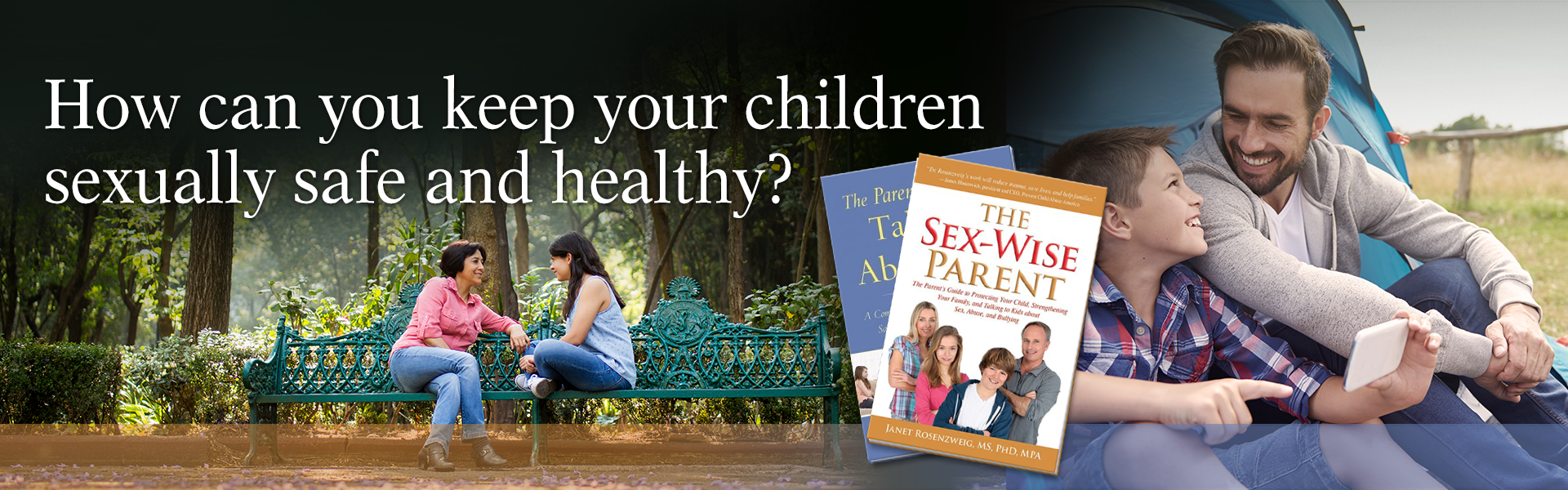
Before you chose a book, decide what you want your child to know.  Then read the book in the bookstore, in your library or on-line and see how the book meets your goal. Parent reviews of some of the highest rated books on this topic include the complaint that the book will open up topics and lead to questions before the child is ready. A well-researched book written by a credentialed and reputable author carefully considers child development; it is much more likely that the parent doesn’t feel ready to deal with a topic. If you need help getting comfortable, use the advice I offer in The Sex-Wise Parent  (Skyhorse, 2012).   One of the easiest things to do is to practice by reading the book with your spouse, partner or a trusted friend and anticipating comments or questions from the child.   Resist the temptation to just give a book to an older child until you read the entire book! You need to know what the author is teaching, and its context. National research results shows that teens report parents having more influence on their decisions about sex than peers or the media; a discussion about the contents of a book is a great way to share your opinions whether they match or differ from those in the book.

Books can be helpful components of promoting the sexual health and safety of your family but you’re never going to find the perfect book.   No book can transmit your family’s values and beliefs wrapped up in love for your child. But a good book, carefully chosen, can be an important addition to your efforts.

Dr. Janet Rosenzweig is the national consultant for child sexual abuse prevention for Prevent Child Abuse America and the author of The Sex-Wise Parent. For more information, read her blog , follow @JanetRosenzweig on Twitter or contact DrRosenzweig@sexwiseparent.com to schedule a program for your school or community group.

THIS ARTICLE FIRST APPEAED IN THE HEALTHY  KIDS BLOG AT PHILLY.COM    http://bit.ly/Iebdrt


What parents need to know about pornography and kids

What parents need to know about pornography and kids

If your children have access to a device with Internet access — and it’s a good bet that they do — it’s an equally good bet they’ve been exposed to pornographic images.

A major study found that almost all boys and two-thirds of girls over age 13 have been exposed to online porn. Most exposure happens between the ages of 14 and 17, but thousands of children 13 and younger are exposed to sexually explicit images daily. Boys are more likely to report that they sought out pornographic images while girls were more likely to report involuntary exposure.

Impact of porn on kids:
Sexually explicit images and erotic art have had a place in almost every culture, so observing a sexual image is not necessarily harmful. But it’s all about context. Pornographic images are often reflections of sex that have nothing to do with real life and young people lack the context to know that. The very fact that such a private act is being shared with the world obliterates the concept of intimacy, and intimacy is an important aspect of sexual health and safety.

Early images influence a young person’s fundamental understanding of sexuality. People develop “sexual archetypes” or fundamental beliefs about sex, and viewing sexual images can become part of this development. If the people in the images look like people who could be a friends or neighbors then the acts may appear acceptable and an involuntary feeling of sexual arousal may make the act even seem more agreeable.

Archetypes become like shorthand the brain uses to immediately put things into categories prior to gathering additional information. For example, if you were bitten by a German Shepherd, the image of such a dog may become part of your archetype for fear. Sexual archetypes are developed when our brain stores information about the characteristics of images, experiences and/or people that lead to our sexual arousal, and the earliest associations with sexual arousal are very important.

The type of images kids see can influence their sexual archetypes and later sexual behavior. One study found that kids who had seen violent pornography were more than five times as likely to have forced or coerced someone into sex as kids who reported watching only non-violent porn. An association of sex and with violence or coercion threatens the sexual health and safety of your children and their future partners.

So what can a parent do?

First, use every technological resource available to limit your children’s access to pornography, including spam filters and parental controls on devices, software and browsers. If your child knows more about technology than you do, call your school or local library and ask if the resident technology professional can offer a workshop to parents.

But don’t count on technology; no measure is foolproof and purveyors of pornography and curious kids are both likely to figure out a way around them. This takes active parenting. Open a discussion about online pornography and consider it a great opportunity to share your family’s values about sexuality and pornography. Don’t start by asking their child if they’ve seen sexual images on line; assume that they have.

 Concepts to explore

Ask about the content of the images using medically accurate terms for body parts and sex acts. Acknowledge that curiosity is normal, and share that these images are fictional and have nothing to do with real life love, sex and intimacy. Then consider exploring these issues:

  • Consent: Did the people in the pictures look like they’d both agreed to the sex act? Did one participant appear to be coercing or otherwise threatening the other? Impart the healthy value that in real life all sex requires explicit consent.
  • Emotions: What feelings did the people in the images seem to be experiencing? Make it clear that that the emotions associated with sex should be love, affection, warmth, and respect.
  • Intimacy: No matter what was going on in the image, the very fact that it was being recorded and shared shows that there was not intimacy; share that healthy sexuality is an expression of deeply private and intimate feelings between partners.
  • Arousal: Involuntary physical arousal from viewing sexual images may leave a youngster both exhilarated and shamed. Sexual arousal is instinctual and autonomic, and people of any age may find their body responding with arousal to an image they intellectually find repulsive. A discussion about the feelings associated with the arousal caused by the sight the pornographic image will break the secrecy and with it the power the images have over the child’s perception of sex.

Finally, while a demand that the child not watch porn is likely to be met with overt or covert resistance, suggest that the child’s future sex life will be much happier and more satisfying if he or she avoids it.   Maybe use the analogy that learning about sex from pornography makes as much sense as learning to drive by watching a NASCAR movie.  And, it can limit the ability to find the satisfaction that comes from sharing  experience with a partner.

The thought of this conversation may make any parent uncomfortable, but here’s the win: when you make an active effort to counteract the messages from online porn, you have a golden opportunity to replace the dysfunctional values with your own. And — research shows us that kids keep listening, even when acting like they’re not!

This article first appeared at Philly.com